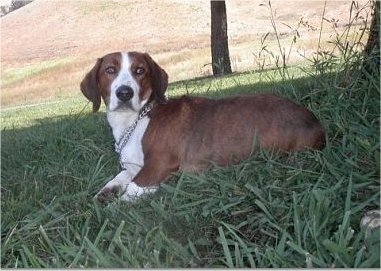
COUNTRY; USA
WEIGHT: 40-50 pounds
HEIGHT: 20-26 inches
COAT; Short and dense
COLOR: Merle and black/tan
OTHER NAMES: Catahoula Hog Dog, Catahoula Cur
GROUP: Herding
Catahoula origin is lost in legends, but similar dogs have long been known in the southeastern United States. The breed is definitely a stock worker, although tougher and more aggressive than many of his shepherd relatives, but his ancestors remain a mystery. It is speculated that he is, in part, descended from the mastiff-type war dogs brought into the area with Spanish explorers. Cathy J. Flamholtz relates how Her-nando de Soto cruelly set these dogs to attack the Indians of the area and then abandoned them to be cared for by their victims! These, if crossed with shepherd dogs of either European or even Indian origin, could have been the breed's roots. There may also have been a drop of hound's blood. The breed will tree and trail although it does take after the shepherd side of the family in more traits. Many old timers still classify the breed as the Catahoula Cur (curs form a group of distinctly American dogs). Henri De Tonti, in 1686, told of seeing dogs with white eyes and mottled spots during his explorations. Jim Bowie owned a pair of Catahoulas, or "Cats" as they were frequently called, in the mid-1800s.
The breed's name comes from the Parish of Catahoula (meaning beautiful clear water), a swampy county in northeast Louisiana, where children went to school by boat rather than bus and where the Catahoula Hog Dog was best known. People from the bayous eked out a living from fishing, trapping, and running a few wild hogs and cattle back in the woods. This stock was wild and unruly, living off acorns and berries, not seeing humans except during the annual round-up. The hogs, particularly, were nearly impossible to drive. They would turn on most herding dogs and fight rather than run. The Cats were essential to gathering and penning the pigs, and their herding techniques are described by H. Ellen Whiteley, DVM in her article "Catahoula Hog Dog Brings Back Memories of Home." Stragglers were picked out by the dogs and forced into a "fight." Distressed screams from the enraged boar brought the other hogs, especially the lead boar, to the rescue with champing jaws and raised back-bristles. The dogs then turned and ran, escaping the slashing tusks, just fast enough to tantalize the hogs into continuing the chase, which soon led directly into the waiting hog pens. The Cats deftly jumped the back fence, and the hogs were trapped!
Good dogs were worth their weight in gold. A natural selection of breeding stock occurred, since inept or slow specimens rarely made it through the first year of work.
When a person needed a working dog, one was received through a neighbor who had puppies. In the past, Catahoulas were generally not sold, due to the Bible verse in Deuteronomy, which states, "Thou shalt not bring ... the price of a dog into the house of the Lord thy God ... "
The modern Catahoula has been adapted for cattle as well as hogs, but he is still better for bringing semi-wild cattle out of the bush than for walking the tame dairy herd into the barn for milking. He is aggressive and heels hard, traits that are necessary for working wild stock, but can spook or injure placid barnyard animals. One breeder, as told to Dennis McClintic, refers to them as "walking sledgehammers." He is also valued for his ability to wind cattle (find them by scent) when they are scattered in heavy cover.
NALC (National Association of Louisiana Catahoulas) is the national organization working to standardize type and educate prospective buyers. In 1979, the Catahoula Dog was named the state dog of Louisiana. Catahoulas use their deep bay to good advantage as watchdogs and hunting companions, even treeing coon. NALC ceased pitting Cats against coons in "Coon on a Log" trials, since it "wasn't fair for the coon to lose all the time." An owner describes her Cat as "strong, made of whipcord and leather," yet gentle with her other dog, though perpetually the "pack leader." The breed is strong-willed, yet sensitive to its owner's needs. They are affectionate and protective of their own family, but often d