Showing posts with label dog breeds. Show all posts

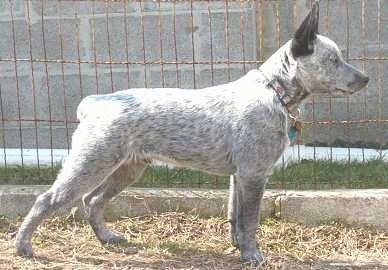
Stumpy - Tail Cattle Dog

COUNTRY: Australia
WEIGHT: 35-45 pounds
HEIGHT: 17-20 inches
COAT: Medium-short, harsh, straight, dense
COLOR: Blue speckled with black markings on head; red speckled with darker red markings on head
GROUP: Herding

Sharing much of the same history and appearance as the Australian Cattle Dog, the Stumpy-Tail Cattle Dog is a cross of the Smithfield and Dingo, accomplished by a drover named Tim-mons. The Smithfield was a longhaired, black and white bobtail, similar to a small Old English Sheepdog. The first samples of Stumpy-Tails were red in color, bob-tailed and were tabbed Timmons Biters. A later influx of Blue-Merle Collies added the blue coloration. The Stumpy-Tail was bred selectively for the three to four inch bobs.

Like the AuCaDo, the Stumpy bites low—at the foot still touching the ground—and immediately crouches to avoid the ensuing kick. A natural selection was easily accomplished by the cattle themselves. A bite to the heel of the hoof in the air, or a tendency to stay erect, served only to lay open the skull of the under-achiever.
The tail must be a natural bob of less than four inches. The Stumpy'$ close relative, the Australian Cattle Dog, is sometimes born tailless as well. The Stumpy-Cattle Dog is unknown outside Australia and is becoming rare in its native land as well.

Shika Inus


Kishu
COUNTRY: Japan
HEIGHT: 17-22 inches
WEIGHT: 30-60 pounds
COAT: Short, coarse and straight, soft, dense undercoat, fringe on cheeks and tail
COLOR: White most common, but can be red, sesame or brindle
REGISTRY: FCI
GROUP: Northern

Kai Dog
COUNTRY: Japan
Height: 17-22 in./43-56 cm.
Weight: 25-55 lb./11-25 kg.
COAT: Short, straight and coarse with soft, dense undercoat, hair longer on the tail
COLOR: Black brindle, red brindle or brindle
OTHER NAMES: Tora (Tiger) Dog
REGISTRY: FCI
GROUP: Northern

The Kishu, Kai Dog and Shikoku fall into the category of Shika Inu, or medium-sized Japanese dogs. They are very similar with overlapping colors and have only small differences in size and other fine points. Originally, these were all dogs that assisted the matagi, the professional hunters, with wild boar or deer. Known for their bravery, it is said that the Shika dog "will not concede a step before danger."
Although mainly working dogs, they all have been more or less adapted as companions and guardians since the matagi profession has nearly disappeared.
The Kishu is the matagi's dog from the mountainous regions of Wakayama and Mie prefectures and has been known since before the Christian era. Although previously used for deer, it was best known for boar hunting. The hunter's weapon was the firelock, which could be fired only once before reloading. If a wild boar was wounded, it could fatally charge the hunter, and the dog was expected to courageously run interference until the hunter could reload. It is not difficult to discern why the breed was noted for its "scarred glory."
These dogs are clean, silent and docile. Although they are useful in herding, as watchdog, fishermen's helpers, or hunters* aides, many are also kept in the home. The Kishu is distinguished from the Ainu Dog because he is a bit longer in body proportions and,although cautious, is more benign of temperament. The white coat tends to disappear in the snow, but has the advantage of being easily distinguished from his dark-colored prey.
Used more for deer, the Shikoku and the Kai are other varieties of the Shika (mid-sized) dogs. As former hunting dogs of the matagi, they were often referred to as "deerhounds." Coming from the mountains around Fuji and the southern Alps region of Yamanishi prefecture, the Kai was considered too rough to make a good house pet, being close to the wild in temperament. Modern dogs are milder and some are now seen in homes. He is, however, loyal to his master and a fine hunter. The Japanese say he is a one-man dog with people. Hunted in packs, he is companionable with other dogs. Brindling may not be apparent until after six months of age.
The Shikoku is the final variety of Shika dogs, and is similar to the other two. His home is Shikoku Island, across the inland sea from Osaka, where he was also used for hunting. This smallest of the middle-sized dogs comes only in solid reds and brindle color. None of the Shika dogs are known outside Japan.

Schillerstovare

COUNTRY: Sweden
WEIGHT: 40-53 pounds
HEIGHT: 19l/2-24 inches
COAT: Short, but very thick with plenty of undercoat Coz,o«: Self-colored tan with a black saddle; no white desired
OTHER NAMES: Schiller Hound
REGISTRY: FCI
GROUP: Hound


The Schillerstovare's ancestors have hunted the Swedish forests since the 1400s. The modern breed evolved through crossing these native dogs with scenting hounds from Germany, Austria and Switzerland.
Per Schiller, the father of the breed, showed two of his dogs at the first Swedish dog show in 1886. These two hounds, "Ralla I" and "Tamb-urini," became the pillars of the breed. The Swedish registering body did not recognize the breed, however, until 1952.
Of only moderate size, he is strongly boned and sturdily made. He carries no exaggeration in earage, skin or head. His square body contains tremendous power, and he is noted for his speed. The Swedish KC booklet says he is the fastest of all the Scandinavian hounds. He is self-colored tan with the black saddle or mantle and no white.
These dogs are particularly useful in hunting snow hare, as they seem to be immune to the cold suffered during long hunts in deep snows.

Puli


COUNTRY: Hungary
WEIGHT: 18-39 pounds
HEIGHT: 14-19 inches
COAT: Long, thick, coarse, wavy, forming cords
COLOR: Any solid colors-rusty black, black, all shades of gray, and white
REGISTRY: FCI, AKC, TKC, CKC
GROUP; Herding


Much of the Hungarian culture came from the Far East with invading Magyars, including its flock-guarding and herding breeds. The Puli is very much like the Tibetan Terrier in structure and instincts. It shows the Asian influence in its short-coupled body, the thick coat covering its body and, particularly, the tail curled over the back.

Its working abilities are of utmost importance. In fact, the dogs which do not measure up are not even given the breed name—they are just plain dogs and are not kept. The breed name is derived from the Puli Hou> the "Destroyer Huns" of Asia. One branch of these nomadic huns, the Magyars, migrated into eastern Europe with their sheep, dogs and horses in the ninth century and settled Hungary. In their native land, more than two dogs are called Pulix\ in America the plural is Pulik. The Puli came close to being lost during the many wars that tore its country, but the breed has survived.


Recognizing the native breed's value as a herding dog, due to its intelligence and eagerness in performing its chores, Emil Raitsits brought the breed back from the edge of extinction.

The Puli coat is remarkable and resembles a rag mop. The idea that the coat is unkempt or not touched is a fallacy. Owners spend a great deal of time keeping their dogs' cords clean. The painstaking cording procedure is begun when the dog is a young puppy. Drying after a bath is time-consuming. Coats may be brushed into a woolly Afro, rather than corded in the States, but only corded coats may be shown in Hungary, Canada and Mexico.

A working Puli is a picture of agility and flying cords. The adult corded coat affords protection from the elements and a cushion from the hooves of cattle.

Pulik have been used for police work in some parts of the world. They have been successful in the show ring and obedience work in North America. In Hungary, these dogs are still seen with flocks.

Polish Hound


COUNTRY: Poland
WEIGHT: 55-71 pounds
HEIGHT: 22-26 inches
COAT: Short, smooth, and very dense, with a slight fringe on under side of tail
COLOR: Black and tan, or black and tan saddled
OTHER NAMES: Ogar Polski
REGISTRY: FCI
GROUP: Hound

The Polish indigenous hound, like so many of the European hounds, is unfamiliar outside his home borders. He is a big, slow, heavy dog, but without the ponderous head, long ears, and excessive skin of the St. Hubert type. He is proba-bly related to the deliberate tracking dogs of Germany and Austria. He has the German hound's large, stiff, flat ears with a bit of flew. In past centuries, he was highly prized for his superlative tracking ability. The War years decimated the breed, but it made a post-War comeback, achieving FCI recognition in 1966. At one time, a smaller version called the Gonczy Polski existed as well.


During the hunt he moves at a steady trot or a heavy gallop, and is highly prized for his perseverance and beautiful voice. Adapted to all terrain and weather, he is a dog of kind and gentle spirit. In recent years, he has again become scarce and is reputed to be quite rare.

Perro De Pastor Mallorquin


COUNTRY: Spain
WEIGHT: 45-60 pounds
HEIGHT: 19-22 inches
COAT: Short (pelo corto) or medium (pelo largo)
COLOR: Usually dark brindle or black
OTHER NAMES: Ca de Bestiar
GROUP Flock Guard

This is a livestock guardian and farm dog originating on the Balearic Islands of Spain. He is a bit smaller than the Portuguese Cao de Castro Laboreiro, but otherwise closely resembles that breed and may, therefore, have a similar history. Their true background is unknown. They have the temperament and mental characteristics of the flock-guarding dogs, but are dark, small and smooth-coated. The breed was brought to the Balearics on early trade routes through the Mediterranean. Since these dogs were isolated on islands, either crossing with other types occurred or a mutation appeared, giving the Perro de Pastor the ability to withstand extreme heat. Whether they were shipped around the Iberian Peninsula to Portugal or the other way around is unknown.

Unknown outside Spain, the Perro de Pastor is quite common there and is seen everywhere on farms and in rural villages. Farmers produce a litter when they need a replacement and give or barter the remainder to their neighbors. Although type is set, there are few breeders or exhibition dogs. In fact, the farmer who owns one might be quite surprised to find out he owns a pure breed. To him, it's just a "farm dog."


The Perro de Pastor is effective and extremely territorial, combining aggression and courage to make any rural family feel safe. He is good and loyal with his owners, but is rarely a house dog. A limited number have been exported to Brazil and a few breeders support the Pastor dog there. No more than a handful of breeders who live on the Iberian Peninsula produce pedigreed specimens. His dark coat requires little care, and the ears and tail remain natural. His rose ears fold back into his neck ruff. The FCI recognizes the breed, listing both the short-coated and long-coated varieties. Today, the long coat is rarely seen and may already be gone. The dogs are universally shorthaired and dark for ease of care.

Perdigueiro Portugueso


COUNTRY: Portugal
WEIGHT: 35-60 pounds
HEIGHT: 201/2-22 inches
COAT: Short and smooth; longhaired (old type)
COLOR: Yellow or chestnut, solid color or with some white in the Irish pattern (not pied)
OTHER NAMES: Portuguese Pointer
GROUP: Gun Dog

Perdigueiro means partridge in Portuguese, and this breed is the native partridge dog. The dog, known by Portuguese hunters as "the National," enjoys a proud history which remains today. The pointer of Portugal stems directly from ancient hawking dogs of the fifth and sixth centuries. Where the hawking dogs came from is unknown, as Portugal was on the ancient sea trade routes from all directions.

Afonso III, living in the 13th century, painted dogs of the type known today. Hawking dogs, then called Podengo de Mastra (pointing hound) were described in a Portuguese book of hunting by Joao I in the late 1300s. During the same era, Gaston Phoebus described the big, beautiful body, the grand head and the white and cinnamon color of the Portuguese falconer's dog.

Well established for so long and with the extensive travel and trade of the Portuguese, this breed may have contributed much to the development of European hunting dogs. The Portuguese Pointer was introduced to England by a Portuguese businessman in the early 1700s. H. Symonds describes the Iberian connection in A Treatise on Field Diversions in 1776 and says the "pointer" was first seen in England "about 40 years ago." Although refined for English tastes, the origin of the "dish" face on the Pointer of England is certainly explained by this history. The Portuguese Pointer is a big, classical, athletic dog still commonly used by hunters throughout his native country. The head has the short muzzle and a slight convexity which is unique to him and his English cousin.


Hunting instincts of the Portuguese are strong and natural- Owners say these dogs begin sight pointing and retrieving sticks and other objects by two or three months of age, without any training. As soon as they are taken to the fields for instructions, they naturally begin an intense searching pattern. They can withstand extremes of climate and do well in any terrain. This dog is exceptionally sweet and affectionate to his master. In fact, the official standard says he can "go to extremes of affection, occasionally embarrassing, which can be easily corrected by ... training." One current owner describes a female that would sit for hours in front of him, staring in adoration. His wife would jokingly say that the dog was the reincarnation of an old lover—the only way to describe the sweet, tender expression in the dog's eyes.
Obedience and sociability in large doses are built into this breed as well. Despite his abundance of attributes and his prestige at home, he has not gained a following outside Portugal.

Pekingese


COUNTRY: China
WEIGHT: 6 pounds, 6-8 pounds, and 8-14 pounds
COAT: Long, straight, harsh and profuse; heavy feathering and abundant undercoat
COLOR: All colors allowed: red, fawn, black, black/tan, sable, brindle, white and particolor (two colors evenly broken all over body); black masks and spectacles around the eyes and lines to the ears are desirable
OTHER NAMES: Peking Palasthund
GROUP: Herding

The Pekingese may be the ultimately dwarfed version of the hairy dogs from Tibet. Or, like the Pug, it may contain some miniature versions of the brachycephalic mastiff dogs. A combination of these two sources could have resulted in this unique canine creation. Whatever the origin, similar miniature dogs have been known in China since the T'ang dynasty of the eighth century. In ancient superstitious times, the "terrifying" lionlike appearance of these dogs, and the "Fo Dog" idols that represented them, were supposed to frighten away evil spirits. The Peke was known by a variety of names: Lion Dog, like his close relatives the Lhasa and Shin Tzu; Sun Dog, for the prized golden color; or Sleeve Dog, when he was small enough to be carried around in a voluminous Chinese sleeve.

The Chinese emperor Ming Ti converted to Buddhism hi the first century AD, and the leonine connection to Buddha was bestowed on the Pekingese, as well as others, to be protectors of the faith. As the centuries passed, the popularity of these and other types of small pet dogs among the wealthy ebbed and flowed. By the beginning of the 19th century, dogs of the Pekingese type had become the darlings of the Chinese imperial court and the next several decades saw them reach their zenith. There were thousands of them around the various imperial palaces, and 4,000 eunuchs were housed and employed in Peking solely for the purpose of breeding, raising and caring for the Pekingese dogs. Slave girls wet-nursed the imperial puppies after their own expendable daughters were slain. No one out- side of the nobility was allowed to own one, and the dogs knew nothing but pampering and gentle care. Two little Pekes announced the appearance of the emperor with short, sharp barks; two more followed daintily carrying the hem of his imperial robe. Stealing one was punishable by death.


When Peking was sacked by the British in 1860, the imperial family gave instructions to destroy all the dogs so that none would fall into the hands of the "foreign devils." Nevertheless, soldiers found four guarding the body of the emperor's aunt, who had taken her own life. These small dogs (all "sleeves" under 6 pounds) were transported back to England where one was given to Queen Victoria who, with grim humor, called her "Looty." Others were soon obtained from Peking through more normal channels, and before long the breed became fashionable and quickly rose to the esteemed position where it has remained. At the end of the 1800s, the regent dowager Empress T'zu Hsi presented a Pekingese to an American artist, Miss Carl, in return for a painting of her favorite dog. She also presented a dog to Alice Roosevelt upon her visit to Peking. J.P. Morgan was another admirer of these dogs and brought a pair home to America. The Peke was accepted by the AKC in 1909 and in England the following year. The Dowager Empress is also credited with the following instructions concerning the little royal dog: it was to be fed sharks' fins and curlews' livers, breasts of quails, tea or milk of antelopes, broth made from the nests of sea swallows; if ill it was to be ". . . anointed with the clarified fat of the leg of a sacred leopard and give it to drink a throstle's egg shell—full of the juice of the custard apple in which has been dis-solved three pinches of shredded rhinoceros horn. , . " Her full description of the Pekingese included an ideal that "its forelegs be bent so that it shall not desire to wander far or leave the Imperial precincts."


In rural northern China today, a very small version of the Pekingese is still bred. This min-iscule canine, under one pound, is considered good luck. Always in the piebald pattern, their spotted coats are "read" like tea leaves. The Pekingese does have rather distinctive physical characteristics that, while pleasing to some, may not be appealing to others. The extremely shortened muzzle puts the nose directly between the eyes, creating a wide "smiling" mouth and a very flat face. This same characteristic causes them to suffer on hot, humid days. Pekingese eyes are prominent and prone to injury. The head is wide and flat, the neck short with relatively massive shoulders and chest, and front legs are short and crooked. Combined with a long body, short stature and rather narrow hips, the breed characteristically moves with a bit of a roll.

Pekingese do have marvelous personalities, exhibiting confidence, charm and a bit of stubborn independence. They are fearless but never aggressive, and their sole purpose in life is to give comfort and companionship to their owners.

Patterdale Terrier


COUNTRY: Great Britain
WEIGHT: 12-13 pounds
HEIGHT: Less than I2l/z inches
COAT: Short and coarse
COLOR: Black, red, chocolate or black/tan
OTHER NAMES: Black Fell Terrier
GROUP: Terrier

Avid terrier people in Yorkshire and the lake districts to this day breed strictly working stock, often generally referred to as fell terriers. As is common with working dogs, they show physical variation, since mating is based only on working qualities and gameness. But one distinct type that emerged is the Patterdale Terrier, named for a village in Cumbria.

These dogs are particularly hard and tenacious. "Many [Foxhound] masters would not thank you for attempting to bolt his [sic] fox with a hard bitten Patterdale, for the dog is more likely to get hold and have a go, possibly kill the fox rather than allow him to bolt. . ." thus spoiling the hunt with the hounds. The fells of the north country, with the protection afforded foxes in borrans, rock tips, mines and scree, created the need for a hard terrier able to scramble over the terrain and fearless enough to go to ground. The Patterdale filled—and still fills—that need.

Dan Russell of Shooting Times and Country Magazine relates the following story of having run a fox to ground in a rough place: "Turning to his terrier, Fury, Joe said 'Thee and me's bin good pals, but t'times come when we mun part, for if tha gaas in here ah'll nivver see thee agen.' In went Fury and soon there were sounds of a terrific battle underground. The fox refused to bolt and after a while Fury came out, badly bitten from ear to ear. The dog was sent to the nearest farm for treatment and tools were sent for. At the end of three hours digging an entrance was made into the borran and there, inside, were ah1 the signs of an Homeric struggle and in the corner, piled on top of each other, were three big foxes."

Further testament to the high esteem in which Patterdales are held is evidenced in the following exchange reported by Nigel Hinch-cliffe: "A Welshman once rang me and asked to buy a black terrier, preferably one fully working. When asked what kind of work, I was told (a bit of ratting on the allotments and the occasional rabbiting in Pembrokeshire.' I declined him, advising him to buy locally, for buying a 'black-un* for such work was like buying a Rolls Royce in which to deliver milk."

The first Patterdales were brought to the USA in 1978. This dog is a laid-back terrier, not as yappy as some, who enjoys "curling up by the heat duct" in the house. Modern owners say he can be kenneled with two or three other terriers, as long as he has enough work and hunting to keep him exercised and content. If stale or bored, he may pick fights with a kennel mate.


They are game and tough when hunting, and hunters often take three or four dogs with them on a jaunt. In the States, these dogs hunt "anything with fur"—woodchuck (groundhog), fox, coon or even badger. An American Patterdale, aptly named "Rocky," a flyweight at 13 pounds, recently drew a 34-pound badger!
An owner says his Patterdales are sensible dogs. When they first enter a burrow, they'll bark and fuss, trying to incite the quarry to bolt. If the prey refuses to budge, only then will the terrier go in for a hold.

The Patterdale has a bit thicker and cheekier head than many of our modern show terriers, suggesting a hint of the Bull Terrier. This may have been what they looked like originally, or this look might have come from a later cross.

Poodles


Poodle, Standard
COUNTRY: France
WEIGHT: 45-70 pounds
HEIGHT: Over 15 inches
COAT: Profuse, dense, harsh, closely curling coat (will cord if not combed)
COLOR: Any solid color
OTHER NAMES: Caniche, Barbone
GROUP: Gun Dog
Poodle, Miniature
COUNTRY: France
HEIGHT: 10-15 inches (USA), 11-15 inches (Great Britain)
COAT: Same as the Standard
COLOR: Same as the Standard
OTHER NAMES: Caniche., Barbone
GROUP: Gun Dog
Poodle, Toy
COUNTRY: France
HEIGHT: Under 10 inches
COAT: Same as the Standard
COLOR: Same as the Standard
OTHER NAMES: Caniche, Chien Canne
GROUP: Gun Dog

Where and when the Poodle breed developed remains a matter of controversy. Shaggy water dogs, often with the clipping which has become a tradition, were known in many countries predating the Christian era. These developed, over time, into the specific breeds we know today. Poodle types were depicted in artwork as early as the 15th century. Germany may have been the actual country of origin, where, known as the pudel, he was well established as a water retriever before that century. It is believed the breed entered France with German troops.

From the marshes of Germany, the Poodle climbed to world-wide popularity. Welcomed by the French, he is still called Caniche, from the French ckien canard for duck dog. In France, he evolved into his modern form. His quick intelligence and charm soon found him favor as a performer, and since the dawn of European circuses, Poodles have entertained as trick dogs. One Poodle, named "Domini," was credited with telling time and playing a challenging game of dominoes. The exaggerated pompons were clipped to match those of the clowns. Small Poodles or Poodle crosses were also used extensively as truffle dogs, sniffing out the delectable underground fungus for their partners, the Dachshunds, who then unearthed the truffle.

The courts of Europe, especially in France, escalated the fad of the pampered pet, a position the Poodle has not lost to this day. Because he assumed most of his modern characteristics in France, FCI has identified that country as his place of origin.


The Standard Poodle may be the oldest of the varieties, but has always has been the least in numbers. His size and coat care require both space and time. To his credit, the modern Standard Poodle is an athletic yet urbane companion. He is still a hearty swimmer and can jog, hike, or compete in obedience with joie de vivre. Yet his long history as a companion enables him to be a gentleman in the home.

The Miniature variety appeared on the scene shortly after its larger siblings became celebrated. In circuses and homes, the smaller size was cheaper to feed and easier to care for. The Miniature has remained the most common of all the Poodle varieties. In fact, in the 1950s and 60s, he soared to a phenomenal popularity all over the world. The numbers were so great that inevitably, some genetic problems occurred. Today, however, the Poodle has returned to a position of security. The Miniature makes a lively, yet mannerly, companion for all lifestyles.

As the Poodle became the rage with the nobility in the 17th and 18th centuries, smaller and smaller specimens were desired, resulting in the birth of the Toy variety. Toy Poodles were portrayed by the German artist, Durer, circa 1500, and by Goya toward the end of the 18th century in Spain. Many in Louis XVI's court fancied the charming dog.

The Toy Poodle has all the same intelligence and friendliness of the two larger versions in a smaller package. As is true with any extreme miniaturization, a few more problems are inherent in the small size, such as in whelping puppies. The ideal for the breed defines a Toy as any Poodle under 10 inches—most show dogs, however, are around eight inches. Some breeders have attempted to produce even smaller specimens, calling them "Teacup" Poodles. No such variety is defined by the standard, and these very tiny dogs are prone to many more inborn problems.

People occasionally disparage the trim as an exaggerated bid for attention but, originally, the Poodle's clip had a practical purpose. The jacket was kept heavy around the joints and organs, for protection in cold water, and the remaining coat was shorn for efficiency. Following that sensible period, came an era of ridiculous embellishments. As revealed by Shirley Kalstone in "Origins of Trimming the Poodle" (AKC Gazette., groomers clipped the dog in any design the owner requested: a family coat of arms, monograms, fleurs-de-lis, with moustachios and im-periales (Van Dyke beards). If desired, they capped it off with a pompadour to match the owner's.


The Poodle coat requires either frequent home-grooming sessions or regular visits to professionals. The modern show ring allows only two coat clips—the English Saddle Clip and the Continental, with the pompons—both with full-length body hair requiring great attention. But most pet owners have their Poodles cut down into a kennel or Dutch clip, with shorter hair making care easier. Early show dogs were occasionally shown with a corded coat and, recently, this style has reappeared.

Poodles have their tails cut to about half-length when the whelps are just a few days old. Except for their size, all three varieties are judged by the same criteria. They move with a light, springy gait, almost as if they were dancing. The Poodle, in all of his varieties, probably remains the most popular companion dog in the world and jockeys with the Cocker Spaniel for AKC's top dog.
Owczarek Podhalanski


COUNTRY: Poland
WEIGHT: 100-150 pounds
HEIGHT: 24-34 inches
COAT: Long, thick, hard, straight or wavy
COLOR: White
OTHER NAMES: Tatra Mountain Sheepdog, Owczarek Tatrzanski, Polish Mountain Dog
GROUP: Flock Guard

The Podhale, where this breed originated, is a small region in southern Poland, against the Tatra
range, which are the highest peaks in the Carpathians. The Podhalanski's history follows that of
similar dogs from Czechoslovakia, Hungary and Rumania, all of which trace back to the white guardian dogs of the Eastern World. The Polish owca (pronounced "ofsta") means sheep, and owczarek (pronounced "ofcharek") is the generic term for sheepdog. This is the same meaning as the Russian word owtcharka or the Yugoslavian ovcar.

This native Polish breed is an outstanding mountain worker. The tail is used as a handhold while
following the dog through rough and steep terrain]. Beside the traditional use as a livestock
guardian, the Polish people often use these dogs for personal protection and as guard dogs in
factories. Much like the people who breed them, the Podhalanskis are independent, self-sufficient
and courageous. They are coveted for their attributes: heartiness, adaptability and bravery. Their
personalities are more easygoing than most of the flock guardians, with irritability or cowardice
being a fault. This may be due to the dogs' use for hauling carts among the dairy, horticultural and
bakery trades. The same dogs may be used in the mountains during the grazing season and in winter
brought to town to help with other chores. Young dogs that show high intelligence are selected for
police, military or guide dog work. Every dog serves the people in some way, and is treated well in
return. Even the dogs lacking in talent are kept for their wool, with the combings used for
upholstery and fine woolens!
Their owners claim the breed is easy to care for in both grooming and feeding. The coat is self-cleansing and "never requires bathing." Like many of the flock guards, Podhalanskis are surprisingly economical to feed. The Podhalanski doesn't need people to be content. These dogs develop their own routines, and quickly attach themselves to environment, buildings, people or animals. As with the other flock-guarding breeds, dominance is exerted over another dog. The dominant one quietly puts his head on the other's shoulders as a reminder. Despite the more tractable tempera- ment, proper dominance must be exerted by the master early in the relationship to overcome the dog's natural independence. Otherwise he might quietly put his head on the owner's shoulder! The Podhalanski is placid and cheerful, but American owners warn about his tendency to bark if left outside alone at night. This breed is constantly on the alert.


The breed is popular in Poland and was intro-duced in the United States and Canada by a few imports
in the 1980s. An American Foreign Ser-vice Officer stationed in Poland came to admire the breed. Once back in the States, he arranged to acquire three of these magnificent Polish dogs. They left Poland "by a whisker," leaving the very day martial law was declared in 1981. From this modest beginning, the Polish Tatra Sheepdog Club of America has been formed to help promote the breed and
to bring owners to- gether for a common cause.

Otter Hound


COUNTRY: Great Britain
WEIGHT: 65-120 pounds
HEIGHT: 23-27 inches
COAT: Medium length; hard and crisp in
texture, with an oily waterproof nature and abundant underwool
COLOR: Generally grizzle or wheaten; black/tan, liver/tan, tricolor
GROUP: Hound

To the American eye, the Otter Hound seems a bit of an oddity, with most hounds being of the smooth type like Beagles and Coonhounds—a shaggy dog seems out of sync. But in France, a wide variety of rough-coated hounds have hunted for centuries. The great Griffons of Niv-ernais, Brittany and, especially, Vendee are most surely the direct ancestors of the Otter Hound. He was perfected in England, with additions of various hounds (including Bloodhound) and water spaniels.

The greffier-rype hound in France is a cold-trailer of great endurance, and these characteristics were useful in developing a dog to hunt otter. Otters, once in abundance, are predators that decimated the fish in English rivers. This furnished an excuse for avid hunters, since otters were the only game in season from April to September, Otter hunting thus became a minor sport during the 18th century.

European otters, weighing up to 24 pounds, live in holes dug in river banks with the entrance under the water surface. These otters can swim for great distances underwater, coining up only occasionally for air. The scent trail they leave on land is called a "drag" and on water is termed a "wash." The Otter Hound has an exquisite scenting ability like that of the Bloodhound, and he easily can pick up and follow a drag ten to twelve hours old. When pursuing a wash, the hounds sometimes swim as long as five hours, an activity requiring the ultimate in both nose and endurance. His oily, thick undercoat and webbed feet make him an Olympic-ability swimmer.


Several British monarchs carried the title of Master of Otterhounds: John; Richard III; Charles II; Edward II and IV; Henry II, VI, VII and VIII; and even Elizabeth I. During the height of otter hunting in the latter half of the 1800s, there were 18 to 20 packs in use throughout Britain each season. Famous hounds, such as the Hawkstone Pack of the Honorable Geoffrey Hill, killed more than 700 otters during a 20-year span. Squire Lomax of Clitheroe was a stickler for the formality of the hunt, and the manner in which his hounds worked was more important than the end result. During the late 1860s, his famous pack was so well trained that it was said they took their cues from him with only a minimal wave of his hand. Many of the major packs of those times would send a "couple" of hounds to the larger bench exhibitions, and the Carlisle and Kendal working packs were also noted for their show winners.

The Otter Hound, like previous hounds that hunted the wolf, was efficient enough to almost annihilate his own existence. The otter numbers were reduced so that fewer and fewer packs could be justifiably supported. In addition, many hunt clubs began crossing the shaggy Otter Hound with Foxhound to gain added speed. By 1900, there were very few purebred Otter Hounds left in England, although a number of good specimens had been exported to the United States. Today the breed is rare on both sides of the Atlantic, save a few fanciers who sponsor it at shows. Otters are now a protected species in England, and otter hunting with dogs has never been practiced in the USA, This canine's background of persistence on a cold trail could perhaps make him useful on other game if anyone cares to try.


His rough, shaggy coat and large size make him the most distinctive of the hounds in America. He requires brushing about once a week. Sometimes the Otter Hound drinks by submerging his entire head in water. It is always at that moment that he decides to show his love for his master and lays his soggy beard in a lap!

These dogs have the independence of hounds yet possess great devotion to their masters. They are affectionate and boisterous, much like the children they enjoy playing with. Their hound attributes of a loud bugle and self-willed nature, combined with substantial size, need the skills of a knowledgeable trainer.

Old Danish Bird Dog


COUNTRY: Denmark
WEIGHT: 40-53 pounds
HEIGHT: 20-23 inches
COAT: Short, dense, and tight
COLOR: Liver and white, a small amount of ticking allowed
OTHER NAMES: Gamle (or Gammel) Dansk Honsehund, Old Danish Pointer
GROUP: Gun Dog


One of only two hunting dogs native to Denmark, this breed was developed in the early 1700s from various farm blodhundes, (probably a form of the St. Hubert Hound), and early pointing dogs brought from Spain by gypsies. The man most responsible for the breed's early development was Morten Bak, and the breed is sometimes still called the Bakhund locally.

The Old Danish Bird Dog was initially used as a retriever, but its skills as a close working gun dog increased over the years. Unfortunately, the breed began to wane and, in 1939, during the War, it nearly disappeared. Due to the persistence of a few enthusiasts, the Honsehund has gained steadily in popularity since that time. Today, in Denmark, its owners boast it is listed as third hunting dog in the number of registrations.

Modern Danish field trial standards for the breed demand a dog that works fairly close and takes direction from his handler while thoroughly hunting the terrain. He must have great stamina, clean retrieves and, although the high point is most desirable, the old style of creeping and/or dropping to a lying position is still seen and allowed. His tail moves eagerly and, upon scent, circles in full rotation. Because of the breed's superlative nose, many are trained for schweisshund work (seeking wounded deer) as well as for bomb detection.


Danish owners say that the breed's abilities are quite universal, with almost all dogs being used for hunting or some other form of work. But they also are a quiet, friendly family dog who can get by with a minimum of exercise. One fan says to live with a Honsehund is like having a "clever and good friend."

The heavy neck skin of the breed is a mark of its ancient hound lineage, but the standard warns against allowing too much exaggeration to creep in. His body proportions are that of a rectangle, being only slightly longer than tall, and his tapering tail is never docked. The Honsehund has had very little exposure outside Denmark, although recently, one was invited to compete in the European World Cup competition for all Continental pointing dogs.

Old English Sheepdog


COUNTRY: Great Britain
WEIGHT: 66 pounds or more
HEIGHT: 22 inches or more
COAT: Long, profuse, hard texture, shaggy
COLOR: Any shade of gray, grizzle, blue or blue merle; with or without white markings
OTHER NAMES: Bobtail
GROUP: Herdin

Despite the name "Old English," evidence suggests the breed is neither old nor all English. An 1835 painting by Sidney Cooper gives us the first illustration of the Bobtail. Its ancestry is through the European shepherd dogs, such as the Bergamasco or Russian owtcharkas, bred to the sheep dogs of the British Islands. The body structure of the OES is more like that of the heavier shepherd dogs seen on the Continent.

Contrary to its nickname, the "Bobtail" was created (by docking), not born. In the 18th century, drovers' dogs, which helped drive the herds to market, were exempt from taxation. To mark these dogs, their tails were docked. The lack of a tail was not a hindrance to the drover's dog, which didn't require the quick turns and stops of the herder. The Bobtail made a good drover's dog: eager, protective of his charges and weather-resistant with his heavy, dense coat. No one spent time on grooming these dogs, however, and they were sheared down annually in the spring along with the sheep. Farmers' wives spun the dog shearings, as well as the sheep's wool, into warm clothing.


Everywhere the breed debuted in shows, it was received with delight. The OES won dedicated fanciers not only in England, but in Canada, the States and other countries around the world, due to its distinctive coat and its singular, rolling gait. That same coat with its time-consuming care, however, has kept its numbers sensible and has not allowed him to become a "dog of the moment." While the pet owner may still resort to the "shear down," the exhibition specimen requires hours of care.

The modern OES retains the appearance of a fluffy clown with the heart of a faithful guardian. The breed is a popular competitor with spectators in the obedience ring and scent hurdle races, and they perform well despite their veil of hair. They tend to be very protective of their possessions. Fanciers recognize the need for a firm hand in training to overcome their strong will.

Nova Scotia Duck Tolling Retriever


COUNTRY: Canada
WEIGHT: 37-51 pounds
HEIGHT: 17-21 inches
COAT: Moderate length, lying close; thick, straight to slightly wavy, plenteous undercoat, fringing fairly abundant
COLOR: Red (from deep golden red to dark coppery red), usually with small white markings on feet, chest, tail tip and sometimes face
GROUP: Gun Dog

The clever manner in which foxes work together to obtain a duck dinner has been observed over the centuries. While one of a pair conceals itself near the waterline, the other fox leaps and cavorts about on the shore, swishing his magnificent tail. The rafts of ducks out on the water soon become curious and move in closer and closer to see what all the commotion is. Soon, some are close enough to be caught by the undercover partner. Indians utilized this mesmerizing practice by stringing a fox skin across a length of shore and yanking it quickly back and forth, simulating the movement of the fox.

Dogs have been taught to draw ducks towards the hunter in the style of the fox. This process is called tolling, from the Old English fallen, to entice. Long ago, Europeans used tolling dogs to draw ducks into the net. For more than a hundred years, in the Little River district of Yarmouth County in southwestern Nova Scotia, hunters used tolling dogs, fashioned after the MicMac Indian Dog, which lured waterfowl in the manner of the fox.

These dogs were the result of various retriever crosses, estimated as Golden, Chesapeake, Labrador and Flat-Coat, with speculation of a dash of Cocker, Irish Setter (for its beautiful red coat) and various small farm collies and/or play-ful spitz Jike dogs. Their unique hunting style has been set for more than a hundred years, buta formal registration and written standard is of recent date (1945). The breed used to be called the Little River Duck Dog or the Yarmouth Toller, but when the Canadian Kennel Club be-gan registering them in the late 1950s, the present name was decreed. FCI gave them full inter- national recognition in 1982. There are a fair number of Tollers and a breed specialty club in
the United States.


The Duck Toller's unconventional style of hunting begins with the hunter concealed in a blind near the shore. A small stick or other re- trieving item is tossed toward the water. The dog rushes out with tremendous animation, twirling and prancing as he retrieves the object and returns to the blind, tail wagging at all times. Some Tollers vocalize as they fetch. The object is thrown again and again. Sometimes the ducks are immediately curious. Other times they may watch the dog make 50 retrieves. The dogs must maintain the animation and enthusi-asm for as long as it takes to draw the fowl. Sooner or later, ducks and geese become curious and move nearer, often hissing and beating the water with their wings as they approach the
shore.

The properly trained tolling dog never breaks concentration to peer at the ducks as they inch closer, but continues his "game." When the ducks are within range, the hunter calls the dog back into the blind, stands up to put the ducks to flight and then shoots. After the shot, the Toller dons his other hat—that of a fine natural retriever.

Hunting with a Toller means being able to come home with a full game bag, even on those sunny, "blue bird" days that are notoriously poor for waterfowl hunting. A small 30-pound bitch is credited with retrieving a Canada goose (no small trophy) from the Atlantic Ocean during a storm. Another retrieved several of these geese, despite a face full of porcupine quills.

One breeder laughingly laments an over-enthusiastic dog, who thoroughly ruined his day's shooting, though providing her master a story for all time. This bitch persisted in catching quail on the wing, and brought the birds to him unharmed.


Tollers are like other retrievers in that they are companionable and easy to train, but as dogs of high energy they need a great deal of exercise. As long as an outlet is found to satisfy that need, they make fine house dogs. More and more owners are finding that obedience is another tal-ent. The Toller's strong retrieving desire and playfulness are natural traits, both necessary for his tolling ability. Tolling is also a natural trait (like pointing) and cannot be taught. These dogs have an intense, natural excitement about their duty. Young dogs need to practice, but training sessions involve establishing a close relationship and having children throw sticks for them to re- trieve. Nova Scotians still refer to working a tolling dog as "playing" the dog. Another owner says, "Tollers are retrieving fools. If anyone ever makes the mistake of throwing a ball for them, they will keep the unfortunate soul throwing until his arm gives out."

The breed is sensible and devoted to its family. An owner in Michigan credits her well-being to her dog, after he twice saved her, once legitimately and more than once "illegitimately." The first instance occurred on a hiking expedition, when she ended on a precarious ledge. This medium-sized dog braced himself so that his owner could grasp his collar and pull herself to safety. The other instance involves her swimming attempts—he won't allow her deeper than ankle-high water!
The Toller may be a bit more reserved to non-family than the Golden Retriever. The coat requires the same care as other retrievers. Some Tollers have very little white, while others evidence the Irish pattern, even to a large facial blaze. The white tip of the tail is highly prized since it can be seen from a distance by the fowl, much like the white tip on Reynard's tail!

Norwich Terrier


COUNTRY: Great Britain
WEIGHT: 11-12 pounds
HEIGHT: 10 inches
COAT: Hard, wiry, broken, lies flat to the body
COLOR: Red to wheaten most common
GROUP: Terrier

The Norwich was separated from the Norfolk only recently and has an identical history. It has many similarities to the Border in size, color and coat, but his head is more foxlike and he has the erect ear. His ancestors may have included some of the same brave fellows that produced the Border and his relative, the Cairn, in the north, and many cynologists feel that red terriers from Ireland figured in his history. The town of Norwich is in the county of Norfolk just north of London in the eastcentral area of England called East Anglia.

In the 1800s, there was no official recognition of the Norwich/Norfolk, which was just another general type farm dog and hunting terrier used in the area. In the 1880s, he became the rage with the undergraduates at Cambridge University and his popularity soared. Some even felt he should be called the Cantab Terrier in honor of the collegiate atmosphere which promoted him. In the early 1900s, the keystone sire was named "Rags." One of the prominent breeders after World War I was named Frank "Roughrider" Jones, a horseman, who had Glen of Imaal Terriers and a dark red brindle Cairn-type bitch. Some of these were bred to Rags, as was a terrier bitch named "Ninety," of Dandie Dinrnont and hunting terrier stock. The harsh-coated red progeny were retained by Jones and these formed the foundation for the Norwich/Norfolk. Early specimens imported into the USA were often called Jones Terriers.

In America they were utilized by several Masters of Foxhounds for their original purpose of assisting the foxhound with the prey that had gone to ground. In fact, the Cheshire Hunt Club of Philadelphia and a few others of the 1920s maintained purebred kennels of Norwich to assist in their hunts. Bred to hunt in packs, they are sociable dogs. Thebreed obtained official recognition from English and American govern-ing bodies in the 1930s.


Like the Border* the Norwich is shown in a nearly natural coat. He is an alert, handsome, and charming fellow who makes a fine companion as well as a working terrier. Up until 1979, the breed was allowed to be shown in the USA with either a prick (erect) ear or a small forward-folding drop ear. At that time, ARC followed the example of The Kennel CJub of England and called the prick-eared variety the Norwich Terrier and established a new breed name, the Norfolk Terrier, for the drop-eared variety. One was named for the town and the other for the whole county.


They are very similar except for the ears. "Wich" is the Norwich, and "wich" is the Norfolk? The Norwich has pointed ears like a witch's hat, and the Norfolk's ears fold.
Both terriers do fine in the house, with sufficient opportunity to "stretch their legs" outdoors. Responsive, but still scalawags, these little dogs bring to mind the warning of terrier man Jerome K. Jerome, "Terriers are born with about four times as much original sin in them as other dogs."

Norwegian Buhund


COUNTRY: Norway
WEIGHT: 26-40 pounds
HEIGHT: 17-18 inches
COAT: Thick, harsh, short, and smooth-lying with a soft wool undercoat.
COLOR: Wheaten, black, wolf sable, small symmetrical white markings, and/or a black mask
OTHER NAMES: Norsk Buhund, Norwegian Sheepdog
GROUP: Northern


The Buhund is one of the earliest known Nordic herding types, although it was not officially recognized until the 20th century. As humans from the North began to live in permanent settlements in the Scandinavian countries, they brought with them the hauling and reindeer-herding dogs used for centuries. This stock was used to create a herding dog for cattle, sheep and horses that doubles as an all-purpose farm dog. Bu in Norwegian means homestead or mountain hut and Buhund is the name given to their sheepdog. The Buhund was already widespread in the Middle Ages and has maintained a similar appearance ever since that time. John Saeland fostered the breed to recognition and formed a club in 1936.

Modern breeders state that the breed can be adapted not only for sheep and goat herding, but also for turkeys, ducks and domestic pheasant. The Buhund is now seen in several countries outside of Norway, and is a lively, courageous and energetic companion. He has become fairly numerous in Great Britain and is gaining a following in Australia as well. Quite adaptable to a variety of tasks, including child's companion, obedience dog, or hearing dog, he is a security guard that is never off-duty.

These dogs are in tune with owners, communicating with various noises and body language. They are highly trainable, great farm dogs and stay within call. The Buhund is a creature of habit and, as one owner said, knows the household routine and is usually one jump ahead.


An English owner tells of walking home from town after dark with her Buhund and another dog. She was attacked from behind and, while the other dog ran off, the Buhund sank its teeth into the aggressor's leg and doggedly held on, allowing her master to escape. In fact, even after the woman was safe, it took several calls for the dog to back off the attack and join her!

Another report tells of a bitch left alone in a home with her newborn pups. When fire broke out in the house, the bitch could have escaped, but chose to stay and protect her pups. Fortunately, she was discovered and saved by her 14-year-old owner.

Their herding and protective instincts come to the fore even when untrained and, occasionally, when unwanted. A town bitch was seen correctly and proudly herding sheep when she was a guest at a farm. Another "aided" her owner in a climb in Wales by tugging at her coat.

Like most of the Nordic dogs, Buhunds are clean, intelligent and fun. They also have the northern traits of great energy, the desire for human companionship, and the need for a firm, consistent master to overcome their strong will.

Northeasterly Hauling Laika


COUNTRY: USSR
HEIGHT: 23-24 inches minimum
COAT: Medium, thick, double coat
COLOR: Any color
OTHER NAMES: Northeastern Sleigh Dog
GROUP: Northern

During the 1940s, Russian cynologists attempted to consolidate the multitude of existing Northern draft/hunting/herding type dogs from Siberia and the Soviet Union into six distinct breeds. This amounted to an exercise in "lumping." They established four hunting or hunting/sledding breeds, one sledding/ herding breed and one pure sledding breed, although they recognized there were other types that did not fit into these parameters.

The pure sledding breed is the Hauling Laika, which is probably an amalgamation of various native draft types.

The standard established is one for a large hauling dog, very similar to the Eskimo Dog or the Malamute.

Soviet cynologists recognize the necessity for sled dogs in the most remote areas of Siberia and the Arctic.

They say dogs and vehicular transportation, even in the 1980s, complement each other.

Should a visitor arrive in the lower Kolyman and Anadyr River areas of far east Siberia during their short summer, says a modern Soviet dog writer, he would immediately notice many idle, dirty dogs. They wander about, covered with clumps of shedding hair and mud, seeming quite useless to the visitor. But the locals know that the long, bitter winter is not far off. Then the dogs grow a beautiful winter coat and work constantly. They pull skiers (doing "skjoring") and haul sleds to all parts of the tundra. They deliver the physician and veterinarian and supplies as well as mail and news from afar.

This dog furnishes warmth to his master when, during a sudden blizzard, every living creature digs into a snow drift. And he can unerringly find his way home even in blinding snow. Hauling dogs often second as hunting dogs as well. A team of six to ten Hauling Laikas, pulling a load of 88-110 pounds per dog, may average three to four miles per hour. This figures to 40-48 miles a day for a four to six day trip in -40 to -50 degree weather, all on only about three pounds of fish a day per dog! Thus to this day, the northern peoples of the Soviet Union love and respect their amazing helpmates.

Norfolk Terrier


COUNTRY: Great Britain
WEIGHT; 11-12 pounds
HEIGHT: 10 inches
COAT: Hard, wiry, broken, lies flat to the body
COLOR: Red to wheaten
GROUP: Terrier

The Norfolk has many similarities to the Border in size, color and coat, but his head is more fox-like and he has the erect ear. His ancestors may have included some of the same brave fellows that produced the Border and his relative, the Cairn, in the north, and many cynologists feel that red terriers from Ireland figured in his history. The town of Norwich is in the county of Norfolk just north of London in the eastcentral area of England called East Anglia.

In the 1800s, there was no official recognition of the Norwich/Norfolk, which was just another general type farm dog and hunting terrier used in the area. In the 1880s, he became the rage with the undergraduates at Cambridge University and his popularity soared. Some even felt he should be called the Cantab Terrier in honor of the collegiate atmosphere which promoted him. In the early 1900s, the keystone sire was named "Rags." One of the prominent breeders after World War I was named Frank "Roughrider" Jones, a horseman, who had Glen of Imaal Terriers and a dark red brindle Cairn-type bitch. Some of these were bred to Rags, as was a terrier bitch named "Ninety," of Dandie Dinmont and hunting terrier stock. The harsh-coated red progeny were retained by Jones and these formed the foundation for the Norwich/Norfolk. Early specimens imported into the USA were often called Jones Terriers.


In America they were utilized by several Masters of Foxhounds for their original purpose of assisting the foxhound with the prey that had gone to ground. In fact, the Cheshire Hunt Club of Philadelphia and a few others of the 1920s maintained purebred kennels of Norwich to assist in their hunts. Bred to hunt in packs, they are sociable dogs. The breed obtained official recognition from English and American governing bodies in the 1930s.

Like the Border, the Norwich is shown in a nearly natural coat. He is an alert, handsome, and charming fellow who makes a fine companion as well as a working terrier. Up until 1979, the breed was allowed to be shown in the USA with either a prick (erect) ear or a small forward-folding drop ear. At that time, AKC followed the example of The Kennel Club of England and called the prick-eared variety the Norwich Terrier and established a new breed name, the Norfolk Terrier, for the drop-eared variety. The town of Norwich is in the county of Norfolk; thus one was named for the town and the other for the whole county.

They are very similar except for the ears. "Wich" is the Norwich, and "wich" is the Norfolk? The Norwich has pointed ears like a witch's hat, and the Norfolk's ears fold.
Both terriers do fine in the house, with sufficient opportunity to "stretch their legs" outdoors. Responsive, but still scalawags, these little dogs bring to mind the warning of terrier man Jerome K. Jerome, "Terriers are born with about four times as much original sin in them as other dogs."

Norbottenspets


COUNTRY: Sweden and Finland
WEIGHT: 26-33 pounds
HEIGHT: 17 inches
COAT: Short and stand-off
COLOR: Basically white, with a few color spots preferably in yellow or brown; black spots permissible
OTHUR NAMES: Nordic Spitz, Pohjanpystykorva
GROUP: Northern

The little spitz of Sweden and Finland began long ago as a hunter of small game. Called the Pohjanpystykorva in Finland, it was taken by immigrant farmers to northern Sweden where it was given an even longer name, the Norrbottens-skollandehund. Although widespread for many years as a common hunting and farm dog, the average owner "didn't know that they had a breed," and breeding programs were not planned. As hunting with this dog waned and the popularity of foreign breeds increased, peo-ple lost interest.

The Norbottenspets was thought to be extinct and was dropped from the rolls of the Swedish KC in 1948. Lovers of the breed continued to scour both countries, discovering good specimens in remote villages and reestablishing breeding programs. It was reinstated by the kennel clubs in Sweden (1967) and in Finland (1970s) and is now quite popular again in both countries. His demand today is as a house companion and for hunting game birds such as grouse and hazel hens. A few have won high prizes in bird-hunting trials. The Norbottenspets has a plus as a house pet—he is not the great barker that most of the other Nordic hunters are.


His coat is quite short for a Nordic dog and his tail curves loosely over the back, turning down to lie against the thigh. He is square and firm bodied. His character is alert, lively, calm and friendly—also described as brisk—but never shy, nervous, or aggressive. The breed is particularly good with children. He is most happy when owned by a hunter, even if a hobby hunter.