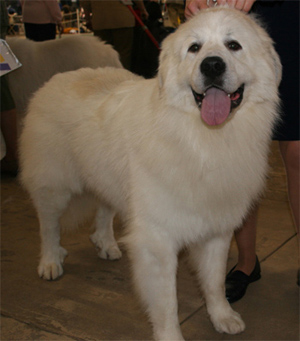
Certainly the most recognizable and populous example of the flock-guarding breeds, the Pyr originated in the Pyrenees Mountains that separate France from Spain. The exact history of the dogs' arrival is not known, but they have been guarding the flocks in France for millenia. Fossils of the breed type have been found predating the Bronze Age (1800-1000 BC). "Discovered" by the French nobility before the Revolution, like the Maremma in Italy, they could be found guarding the large chateaux in southern France. Dauphin Louis XIV named the breed the Royal Dog of France.
This didn't secure the Pyr in the hands of royalty, however. The peasants continued to make use of his abilities as flock guard. Although physical characteristics such as strength, keen hearing, and big paws for sure-footedness were deemed highly preferable, the psychological aspects of the dog were considered of prime importance. If a dog didn't bond to the sheep and protect them despite his own discomforts, the dog was killed, abandoned or sold (at a steep price) to a tourist who didn't care about these attributes.
Pyrs also bore the ignominy of being dupes for smugglers. These majestic dogs wore a backpack stuffed with contraband, taking it across the border between France and Spain, Their sure-footedness enabled them to take roads impassable to humans, allowing the dogs to avoid detection by customs officials.
Early Pyrenees were brought to the Canadian Maritime Provinces by Basque fishermen and stayed long enough to mix their genes with local retrievers, creating a genetic base for the Newfoundland and Landseer. General Lafayette sent two of these dogs to a writer friend in America, touting the Pyrs' expertise in flock guarding.
The early 20th century found these dogs nearly extinct. Bernard Senac-Lagrange, a French aristocrat and well-known dog authority, can be credited with saving the breed. He consolidated various factions, went into the mountains to obtain good specimens and created the first written standard.
Imported into America soon after Lagrange's time, the Pyr achieved AKC recognition in 1933. During World War II, the breed carried messages and packs for the French troops. In America, deemed too large for military service, they were trained for pack work designed for an Alaskan campaign, if such a service was needed. When this idea was discarded, the Pyrs were "honorably discharged."
This lovely show dog has been sweetened considerably in temperament from the strong guarding dogs of the mountains, and has become one of the gentle giants. Specimens hailing directly from the Pyrenees may still have more of the typical independence and wariness.
There is no need to feel that the breed has been ruined by exhibition, however. Because of his greater availability and higher profile, he is one of the breeds most commonly (and successfully) called upon for predator control. Farmers or ranchers introduce the puppy to the flock very early. By the time the pups are six months old, they are usually fully bonded to the sheep and are beginning to protect them. This breed does well with all livestock and with other dogs.
Pyrs have double dewclaws on the hind feet. A consistent regime of grooming is necessary to keep the dog shiny, unmatted and healthy. They are loving and protective of their home and family and need to be a part of activities. Lagrange said, "Only the true breed possesses this bewitching, almost indefinable expression in the eyes, both distant and caressing, contemplative and just a little sad. As you look in these eyes the immense moral value of the breed pierces your soul."
No comments:
Post a Comment