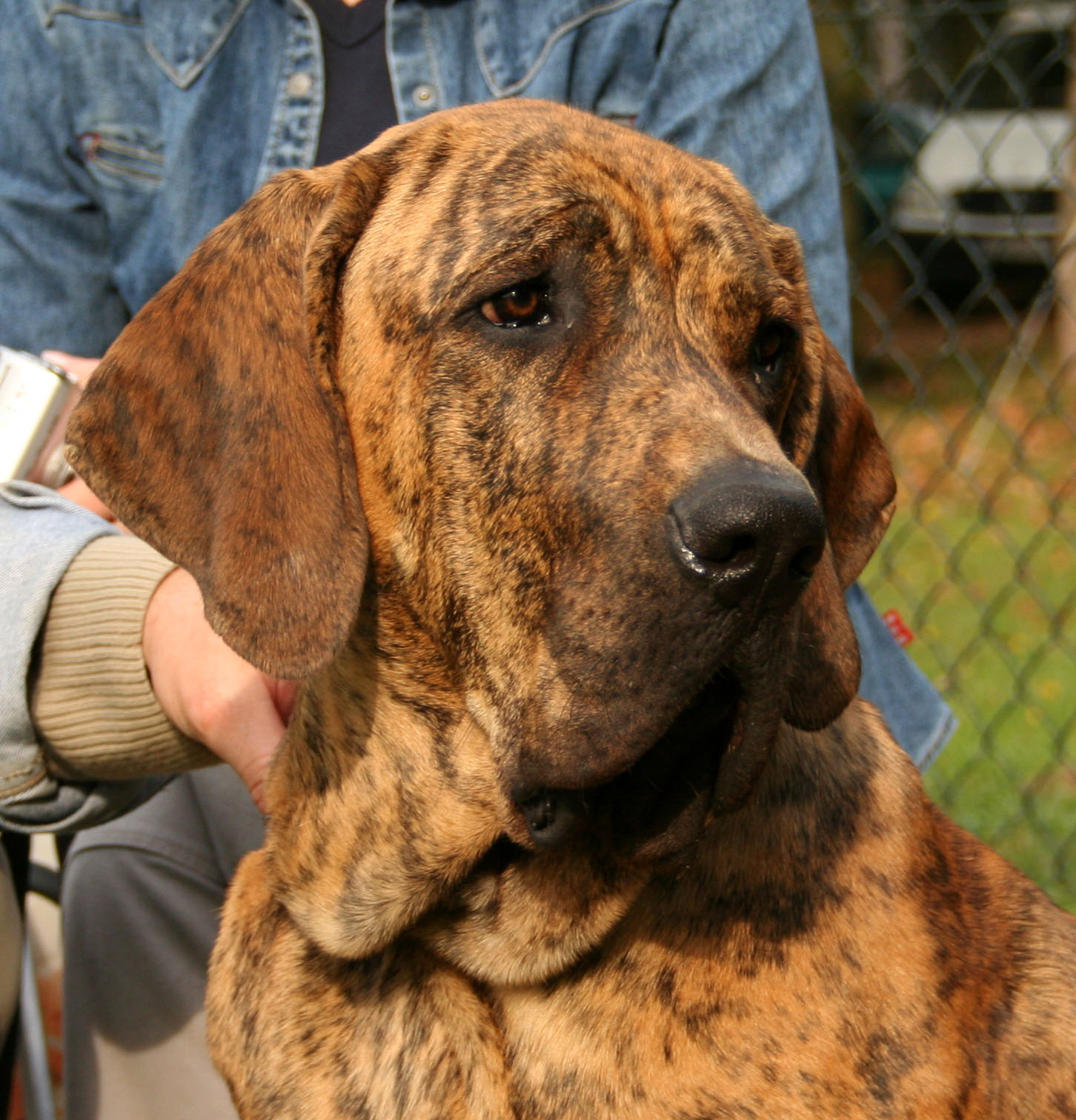
COUNTRY: Brazil
WEIGHT: Minimum 90 pounds female, 100 pounds male
HEIGHT: 24-29V2 inches
COAT: Short, smooth
COLOR: Brindles and all solid colors, except white or mouse gray
OTHER NAMES: Brasilian Mastiff, Brasilian Molosser
Group:Mastiff
The Fila Brasileiro's ancestors were brought into Brazil by the Portuguese conquistadores. The breed was created in the 19th century through existing mastiff and bullenbeisser stock, crossbred with Bloodhound. The introduction of scenthound into this molosoid blend gave the Fila its longer muzzle (equal in length to back skull), shallow stop and long, folded ear.
The Fila Brasileiro's ancestors were brought into Brazil by the Portuguese conquistadores. The breed was created in the 19th century through existing mastiff and bullenbeisser stock, crossbred with Bloodhound. The introduction of scenthound into this molosoid blend gave the Fila its longer muzzle (equal in length to back skull), shallow stop and long, folded ear.
Brazilian ranchers of the 19th century were isolated, needing tough dogs for protection, to hunt jaguars and to track runaway slaves. The Filas were also intended to give assistance with the semi-wild cattle. When attempting to turn or stop a cow, they might bite and grasp the cheek or nose, but they generally grabbed the ear, just like their Alaunt ancestors. Although the breed has been utilized on ranches since its beginning, formal breeding—according to a standard—was augmented in the 1950s.
An abundance of loose skin hangs on the head and neck, denoting the hound ancestry. Although massive, they should be 40-50 pounds less than an English Mastiff of comparable height. The File's hind legs are lighter in bone, longer and less angulated than his front legs, giving him a downhill appearance. The dog sways in a "camel pace," causing a correct rocking and rolling motion to the gait. The pace is unique to the breed, unlike all others which are expected to trot. They are good jumpers, very agile and fast.
The Brazilian standard warns judges not to touch Filas if they wish to keep all their fingers, since aggression is often encouraged. Dogs raised with firm corrections and socialization are shown without incident, however. These dogs are used successfully in schutzhund work in Germany, where they demonstrate their intelligence and ability to be controlled. Passing a shooting test, in which a blank pistol is fired five meters from the dog, is a requirement for all Brazilian champions. They must also pass a temperament test, where dogs (over 12 months) are approached aggressively with a stick. In both cases, the dog should express attention, showing self-confidence and assurance. The judge watches for the dislike the animal shows toward strangers and the self-assurance, courage, determination and bravery of each individual.
The Fila is the most popular breed in its native country. It has not been in the USA long, but has steadily gained ground. Filar in Portuguese means to hold or secure. "Faithful as a Fila dog" is an old Brazilian proverb; the Fila's temperament makes it totally loyal to owner and family and naturally distrustful of strangers. A breeder says, 'This breed needs a home that understands and needs a dog that will not be friendly with strangers, even those allowed into the home. They should not attack viciously for no reason, but members outside the family should not expect to pet, play or be friendly with an adult." It is totally fearless in the face of danger. The Fila standard states the dog should have a calm, noble, self-assured expression when in repose and a determined, alert, firm one when at attention.
Filas do well in any climate, and their short coat is easily kept up. These dogs adore all members of their human families, including children, and love being close to them, even sitting on their feet. Caution must be taken with visitors, and early socialization is recommended for the pet or show dog. A breeder states the Fila is for "owners with responsible attitudes, not a macho personality."
No comments:
Post a Comment