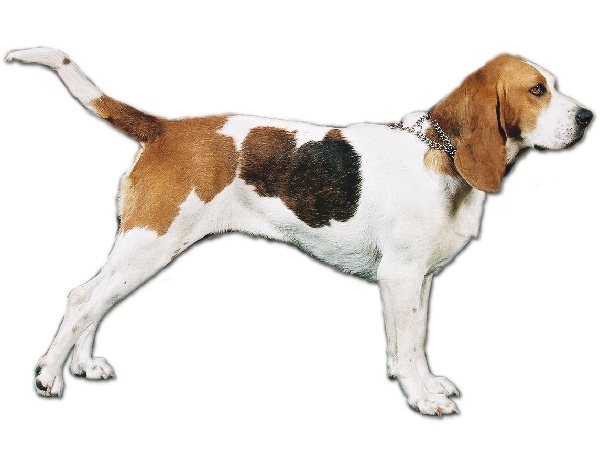
COUNTRY: France
WEIGHT: 40-53 pounds
HEIGHT: 201/2-23 inches
COAT: Short and smooth
COLOR: Tricolor in a broken pattern
OTHER NAMES: Briquet
GROUP: HoundNorthern France, bordering the English Channel, consists of the historical regions of Normandy and Artois. Normandy, Brittany's eastern neighbor, has the same rolling plains and poor soils. As one moves east into Artois right up on the Belgian border, however, fertile soils and forests abound. The Ardennes area of Belgium, where the St. Hubert was developed, is a near neighbor. Hounds from these regions stem from some of the earliest types.
The d'Artois dog was a favorite by the 17th century. The Prince Alexandre de Gray wrote to the Prince de Galle, in 1609, of his intention to "send a pack of little d'Artois dogs to the king ..." In fact, this small French hound may have contributed to the formation of the Beagle in England.
By the 19th century, the curse of fashion was laid upon the breed. It became chic among French hunters to avail themselves of the dogs from the British Isles. With the importation of many British types, the inevitable crossbreeding resulted in the deterioration of the pure d'Artois. Crossing also took place with the taller, more elegant, longer, scroll-eared hounds called Normands (now extinct). During the 1800s, only the packs kept at Chantilly and those of the Prince de Conde retained the ancient type.
In the 1880s, Ernest Levair and his cousin, M. Therouanne, began a 20-year effort to breed the original d'Artois, removing the last of the Normand blood. Although their efforts resulted in great success, the war years again nearly destroyed the breed. Once thought to be extinct, there are now about 500 dogs registered in their stud books, making a strong comeback since 1975. They have the small size, shorter head, sturdy body with wide chest, and long, but very flat ears of the original type.
This breed is a supple, rustic hunting dog that is becoming increasingly available to French hunters. Used in small packs for rabbit, other small quarry, or even wild boar, he has a melodious, high bark.
No comments:
Post a Comment